The Grand Plan was to convert a white van into a camper then set out in it to visit every country in continental Europe in the space of 6 months. And perhaps also raise a bit of money for charity in the process......
Please follow my travels around Europe (from February to July 2015) by reading the Travel Blog page. The posts are all archived and remain available. On each day's blog post there is a link to a google map showing that day's route.
Lostintransit is also on Facebook.
The Route page shows my full route, and the journey planning considerations for the challenge.There is a link to a google map that shows all my stops in some detail.The separate Current Location tracker is now only showing the final third of my route, but during travel, provided a real-time location.
My construction of the van throughout 2014 is chronicled in another blog, on The Van page.The posts are all archived and remain available.
Please scroll down below to see the fulls lists of European countries, and Unesco world Heritage sites, visited
Also on this page is a list of travel writers, and their adventures, which I have used as sources of inspiration.
Please follow my travels around Europe (from February to July 2015) by reading the Travel Blog page. The posts are all archived and remain available. On each day's blog post there is a link to a google map showing that day's route.
Lostintransit is also on Facebook.
The Route page shows my full route, and the journey planning considerations for the challenge.There is a link to a google map that shows all my stops in some detail.The separate Current Location tracker is now only showing the final third of my route, but during travel, provided a real-time location.
My construction of the van throughout 2014 is chronicled in another blog, on The Van page.The posts are all archived and remain available.
Please scroll down below to see the fulls lists of European countries, and Unesco world Heritage sites, visited
Also on this page is a list of travel writers, and their adventures, which I have used as sources of inspiration.
Lost in Transit
|
The crew in the Pyrenees
|
Country counter : Countries visited during the journey(including the UK) 37

GB
|

D
|

A
|

F
|

E
|

P
|

AND
|

MC
|

I
|

V
|

RSM
|

SLO
|

HR
|

BiH
|

MNE
|

AL
|

MK
|

GR
|

BG
|

RO
|

H
|

SRB
|

SK
|

CZ
|

PL
|

LT
|

LV
|

EST
|

FIN
|

S
|

N
|

DK
|

NL
|

B
|

L
|

CH
|

FL
|
Unesco World Heritage Site counter : sites visited during the journey 67
SPAIN
Burgos Cathedral
Old City of Salamanca
The walls of Avila
The monastery and site of El Escorial
The Roman Aqueduct and old town of Segovia
Mudejar Architecture of Aragon, as typified in Teruel
PORTUGAL
Alto Douro wine region
FRANCE
The old city of Carcassonne
The Canal du Midi (a very small segment !)
The Roman aqueduct of Pont du Gard
The historic centre of Avignon:Papal palace, Episcopal ensemble and Avignon bridge
The Roman and Romanesque remains at Arles
Vauban's citadel in Besancon
Abbaye de Fontenay,Burgundy
The Palace of Versailles
The modern centre of Le Havre
ITALY
Genoa : Le Strade Nuove and the system of the Palazzi dei Rolli
The Cinque Terre
Historic centre of San Gimignano
Historic centre of Siena
The Val D'Orcia ,Tuscany
Historic centre of Pienza
Historic centre of Rome
Villa d'Este ,Tivoli
Villa Adriana,Tivoli
Historic centre of Urbino
Historic centre of San Marino and Monte Titano
Ferrara , city of the Renassance
Historic centre of Mantua
City of Verona
City of Vincenza
The botanical garden in Padua
Venice and its lagoon
CROATIA
The Episcopal complex of the Euphrasian Basilica in Porec
Plitvice lakes National Park
The cathedral of St James,Sibenik
Historic City of Trogir
The old city of Dubrovnik
BOSNIA AND HERZEGOVINA
The old bridge area of Mostar
MONTENEGRO
The town of Kotor
MACEDONIA
Ohrid
GREECE
The tombs at Vergina
Byzantine remains in Thessaloniki
ROMANIA
The historic centre of Sighisoara ,Transylvania
The fortified Saxon churches of Transylvania
HUNGARY
The Roman early Christian tombs at Pecs
The historic centre of Budapest
AUSTRIA
The cultural landscape of the Ferto/Neusiedlersee area
The historic centre of Vienna
The Schonbrunn Palace,Vienna
SLOVAKIA
The town and area of Banksa Stiavnica
CZECH REPUBLIC
The Archbishop's Palace and gardens in Kromeriz
The Holy Trinity column in Olomouc
POLAND
The historic centre of Krakow
Auschwitz-Birkenau concentration camp
The Centennial Hall in Wroclaw
The historic city of Torun
LITHUANIA
The historic centre of Vilnius
LATVIA
The historic centre of Riga
ESTONIA
The historic centre of Tallinn
SWEDEN
Drottningholm Palace, Stockholm
The bronze age rock carvings at Tanum
DENMARK
The burial mounds, runic stones and church, Jelling
GERMANY
The historic city of Lubeck
Town Hall ,and statue of Roland, Bremen marketplace
The city of Trier:Roman remains and Romanesque cathedral
LUXEMBOURG
The historic centre of Luxembourg,and its fortifications
Burgos Cathedral
Old City of Salamanca
The walls of Avila
The monastery and site of El Escorial
The Roman Aqueduct and old town of Segovia
Mudejar Architecture of Aragon, as typified in Teruel
PORTUGAL
Alto Douro wine region
FRANCE
The old city of Carcassonne
The Canal du Midi (a very small segment !)
The Roman aqueduct of Pont du Gard
The historic centre of Avignon:Papal palace, Episcopal ensemble and Avignon bridge
The Roman and Romanesque remains at Arles
Vauban's citadel in Besancon
Abbaye de Fontenay,Burgundy
The Palace of Versailles
The modern centre of Le Havre
ITALY
Genoa : Le Strade Nuove and the system of the Palazzi dei Rolli
The Cinque Terre
Historic centre of San Gimignano
Historic centre of Siena
The Val D'Orcia ,Tuscany
Historic centre of Pienza
Historic centre of Rome
Villa d'Este ,Tivoli
Villa Adriana,Tivoli
Historic centre of Urbino
Historic centre of San Marino and Monte Titano
Ferrara , city of the Renassance
Historic centre of Mantua
City of Verona
City of Vincenza
The botanical garden in Padua
Venice and its lagoon
CROATIA
The Episcopal complex of the Euphrasian Basilica in Porec
Plitvice lakes National Park
The cathedral of St James,Sibenik
Historic City of Trogir
The old city of Dubrovnik
BOSNIA AND HERZEGOVINA
The old bridge area of Mostar
MONTENEGRO
The town of Kotor
MACEDONIA
Ohrid
GREECE
The tombs at Vergina
Byzantine remains in Thessaloniki
ROMANIA
The historic centre of Sighisoara ,Transylvania
The fortified Saxon churches of Transylvania
HUNGARY
The Roman early Christian tombs at Pecs
The historic centre of Budapest
AUSTRIA
The cultural landscape of the Ferto/Neusiedlersee area
The historic centre of Vienna
The Schonbrunn Palace,Vienna
SLOVAKIA
The town and area of Banksa Stiavnica
CZECH REPUBLIC
The Archbishop's Palace and gardens in Kromeriz
The Holy Trinity column in Olomouc
POLAND
The historic centre of Krakow
Auschwitz-Birkenau concentration camp
The Centennial Hall in Wroclaw
The historic city of Torun
LITHUANIA
The historic centre of Vilnius
LATVIA
The historic centre of Riga
ESTONIA
The historic centre of Tallinn
SWEDEN
Drottningholm Palace, Stockholm
The bronze age rock carvings at Tanum
DENMARK
The burial mounds, runic stones and church, Jelling
GERMANY
The historic city of Lubeck
Town Hall ,and statue of Roland, Bremen marketplace
The city of Trier:Roman remains and Romanesque cathedral
LUXEMBOURG
The historic centre of Luxembourg,and its fortifications
The Inspiration
1.Patrick Leigh Fermor's journey across Europe in the 1930's
1.Patrick Leigh Fermor's journey across Europe in the 1930's
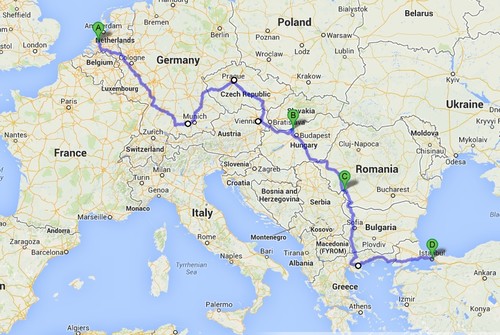
In 1933,Patrick Leigh Fermor ,then aged 18 ,recently expelled from school, set off to walk solo from Rotterdam to Istanbul. The first part of the journey (A to B on the map) was covered in his book A Time of Gifts. The second part (B to C) was the subject of Between the Woods and the Water. And the final leg (C to D) is described in the recently (posthumously)published The Broken Road.The trip took him across Europe at the time Nazism was in the ascendency, staying in an eclectic mixture of stables,hostels and the stately homes of the Austro-Hungarian nobility,all of which was to be shortly swept away by the war and the subsequent communist regimes.This early version of a 'gap year' in fact took 2 years before he arrived in Constantinople on 1 January 1935, then he continued on to travel around Greece. In March, he was involved in the campaign of royalist forces in Macedonia against an attempted Republican revolt. He was fascinated by Greece and its language. In Athens, he met Bălaşa Cantacuzino, a Romanian princess, with whom he fell in love. They moved on to Băleni, the Cantacuzino house in Moldavia, where they were living when World War II was declared .When WW2 broke out ,his knowledge of languages and established self reliance made him an ideal candidate for the British special forces.He fought with the Cretan resistance,famously kidnapping the German General Kreipe and spiriting him away to British Egypt.This feat was documented by Leigh Fermor in "Abducting a General" and in Anthony Beevor's "Crete,the battle and the resistance"
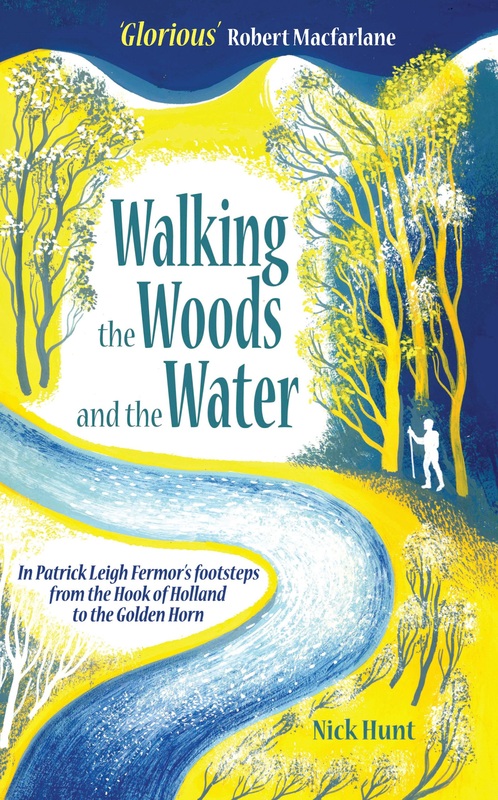
The journey was retraced in 2011 by Nick Hunt,(whose great uncle was Sir John Hunt of Everest fame).Nick Hunt described his modern day trip ,in the footsteps of Leigh Fermor, in his own book Walking the Woods and the Water,and while having adventures of his own,also set out to find what had changed in Europe since Leigh Fermor's journey.
The journey was retraced in 2011 by Nick Hunt,(whose great uncle was Sir John Hunt of Everest fame).Nick Hunt described his modern day trip ,in the footsteps of Leigh Fermor, in his own book Walking the Woods and the Water,and while having adventures of his own,also set out to find what had changed in Europe since Leigh Fermor's journey.


2.Michael Palin's "New Europe" journey 2006/2007

Michael Palin made this journey for his "New Europe" TV series(still screening regularly on some freeview channels.) Michael Palin is of course one of the legends of my teenage years; an era when we grew up knowing Monty Python sketches by heart.No better,then,that he should morph into a chirpy travel writer and film his visits to the sort of places I should like to go to as well.
In his words "We began filming on May 16th 2006 in the Julian Alps in Slovenia and I delivered my last piece to camera on Rugen Island in the Baltic almost a year later. Our total filming time was just short of six months, approximately the same time it took me to write the book. As soon as we arrived in Slovenia I knew that we were not going to be short of natural beauty and throughout most of the filming the sun shone and revealed eastern Europe as anything but grey. The Danube Delta, the Carpathian Mountains, the Curonian Spit on the Baltic Coast and Cappadocia in Turkey were strikingly beautiful locations. But the main bonus of this journey was the rich variety of people and countries. Since the collapse of the Soviet Empire , a host of new independent states has emerged , all anxious to establish their own identity, parade their own culture and celebrate their own history. The filming and the writing of the book was an intense experience, but an uplifting one, as I learnt so much about my fellow Europeans and came away from it all feeling a cautious but encouraging optimism. As I conclude on camera at the end of the series, there does seem a real hope that Europe could, for the first time in many centuries, be united by co-operation rather than conflict.
We visited twenty countries, twice as many as in Sahara and Himalaya combined, so there was no way that this series seemed tight or constricted. Six one-hour episodes turned into seven but despite that there wasn’t time to do justice to every country we went through. I've called eastern Europe New Europe because I had a strong sense of vigour and vitality and hope in the countries liberated from years as anonymous pieces of someone else’s empires.
Europe is a much more tangible concept than I thought when I set out. East and west share a heritage and a history going back over centuries."
In his words "We began filming on May 16th 2006 in the Julian Alps in Slovenia and I delivered my last piece to camera on Rugen Island in the Baltic almost a year later. Our total filming time was just short of six months, approximately the same time it took me to write the book. As soon as we arrived in Slovenia I knew that we were not going to be short of natural beauty and throughout most of the filming the sun shone and revealed eastern Europe as anything but grey. The Danube Delta, the Carpathian Mountains, the Curonian Spit on the Baltic Coast and Cappadocia in Turkey were strikingly beautiful locations. But the main bonus of this journey was the rich variety of people and countries. Since the collapse of the Soviet Empire , a host of new independent states has emerged , all anxious to establish their own identity, parade their own culture and celebrate their own history. The filming and the writing of the book was an intense experience, but an uplifting one, as I learnt so much about my fellow Europeans and came away from it all feeling a cautious but encouraging optimism. As I conclude on camera at the end of the series, there does seem a real hope that Europe could, for the first time in many centuries, be united by co-operation rather than conflict.
We visited twenty countries, twice as many as in Sahara and Himalaya combined, so there was no way that this series seemed tight or constricted. Six one-hour episodes turned into seven but despite that there wasn’t time to do justice to every country we went through. I've called eastern Europe New Europe because I had a strong sense of vigour and vitality and hope in the countries liberated from years as anonymous pieces of someone else’s empires.
Europe is a much more tangible concept than I thought when I set out. East and west share a heritage and a history going back over centuries."
Below are listed what I believe to be some more of the classics of travel writing:they are all inspiring and all can be read again and again.
Click to set custom HTML
Nick Danziger: Danziger's travels
This account describes the adventures of Nick Danziger in the early 1980's.
Gaining a small travel bursary (£200)from the Winston Churchill trust , he hitch-hiked and walked through southern Turkey, and the Iran of the Ayatollahs, adopting a disguise as an itinerant Muslim and entering Afghanistan illegally in the wake of a convoy of Chinese weapons and then spent months dodging Russian helicopter gunships with the(at the time)Western backed rebel Mujaheddin who were resisting the Russian occupation. He was the first European to cross from Pakistan into the closed western province of China since the revolution in 1949,and he spent time among the oppressed Uighur community, dodging the Chinese authorities.
This account describes the adventures of Nick Danziger in the early 1980's.
Gaining a small travel bursary (£200)from the Winston Churchill trust , he hitch-hiked and walked through southern Turkey, and the Iran of the Ayatollahs, adopting a disguise as an itinerant Muslim and entering Afghanistan illegally in the wake of a convoy of Chinese weapons and then spent months dodging Russian helicopter gunships with the(at the time)Western backed rebel Mujaheddin who were resisting the Russian occupation. He was the first European to cross from Pakistan into the closed western province of China since the revolution in 1949,and he spent time among the oppressed Uighur community, dodging the Chinese authorities.
Eric Newby: Slowly down the Ganges
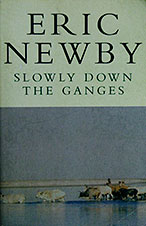
Written in the 1960's ,Eric Newby’s book, documenting his journey down the Ganges in a boat is much more than just a story of adventure. Newby ,travelling with his wife Wanda and an Indian friend known only as "G" ,had to work hard to find boats to take him short distances downstream, haggle with unfriendly boatmen, and even ensure that his relationship with his wife remained in good terms. The part of enjoying the boat ride on a beautiful river ,which he had perhaps predicted and hoped for , seemed to be overtaken by a host of mundane but important things, and minor disasters, most of the time.
When Newby made his grand plans to travel on the Ganges in a boat, he probably assumed it is going to be a pleasurable and enjoyable journey, or even a romantic journey, since he had his wife along with him. It did not take a long for him to realize the realities, which was completely devoid of any of these anticipations. No-one else in India ever bothered to navigate the Ganges over the route he attempted, for good reason.Their boat ran aground more than 30 times in the first four days, and they did not even manage to cover a good 60 miles in this time. Having failed to find some one who could take them all the way from Haridwar to Calcutta, they had to resort to making the journey in bits and pieces. While a good time was spent on the river rowing different boats downstream, they also traveled by motor boats, train, buses and even bullock carts.
Written in the 1960's ,Eric Newby’s book, documenting his journey down the Ganges in a boat is much more than just a story of adventure. Newby ,travelling with his wife Wanda and an Indian friend known only as "G" ,had to work hard to find boats to take him short distances downstream, haggle with unfriendly boatmen, and even ensure that his relationship with his wife remained in good terms. The part of enjoying the boat ride on a beautiful river ,which he had perhaps predicted and hoped for , seemed to be overtaken by a host of mundane but important things, and minor disasters, most of the time.
When Newby made his grand plans to travel on the Ganges in a boat, he probably assumed it is going to be a pleasurable and enjoyable journey, or even a romantic journey, since he had his wife along with him. It did not take a long for him to realize the realities, which was completely devoid of any of these anticipations. No-one else in India ever bothered to navigate the Ganges over the route he attempted, for good reason.Their boat ran aground more than 30 times in the first four days, and they did not even manage to cover a good 60 miles in this time. Having failed to find some one who could take them all the way from Haridwar to Calcutta, they had to resort to making the journey in bits and pieces. While a good time was spent on the river rowing different boats downstream, they also traveled by motor boats, train, buses and even bullock carts.
Eric Newby: A short walk in the Hindu Kush
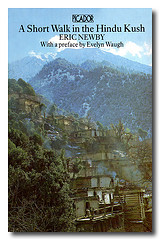
This is another classic by Eric Newby. It is an account of his quixotic adventure in the Hindu Kush in 1958, around the Nuristan mountains of Afghanistan, ostensibly to make the first mountaineering ascent of Mir Samir with a friend from the foreign office ,Hugh Carless. . It has been described as a comic masterpiece, intensely English, and understated. Publications including The Guardian and The Telegraph list it among the greatest travel books of all time. The action in the book moves from Newby's life in the fashion business in London to Afghanistan. On the way Newby describes his very brief training in mountaineering in North Wales, a stop in Istanbul, and a nearly-disastrous drive across Turkey and Persia. Disagreements with his travelling companion are comically described,as well as the amateur mountaineeering skills of the pair for such a challenge.Near the end of the trip they briefly meet that legend of English travelers,Wilfred Thesiger.
This is another classic by Eric Newby. It is an account of his quixotic adventure in the Hindu Kush in 1958, around the Nuristan mountains of Afghanistan, ostensibly to make the first mountaineering ascent of Mir Samir with a friend from the foreign office ,Hugh Carless. . It has been described as a comic masterpiece, intensely English, and understated. Publications including The Guardian and The Telegraph list it among the greatest travel books of all time. The action in the book moves from Newby's life in the fashion business in London to Afghanistan. On the way Newby describes his very brief training in mountaineering in North Wales, a stop in Istanbul, and a nearly-disastrous drive across Turkey and Persia. Disagreements with his travelling companion are comically described,as well as the amateur mountaineeering skills of the pair for such a challenge.Near the end of the trip they briefly meet that legend of English travelers,Wilfred Thesiger.
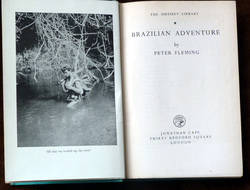
Peter Fleming: Brazilian Adventure
The young Peter Fleming,the brother of Ian Fleming of James Bond fame,working for the Spectator in 1931 ,answered an advertisement in The Times: "Exploring & sporting expedition, under experienced guidance, leaving England June, to explore rivers Central Brazil, if possible ascertain fate Colonel Fawcett...Room two more guns..." He lost no time as signing on as one of the "guns" and also wangled a role as Times correspondent with the expedition.
Shooting was Peter's great passion; solving the mystery of Colonel Fawcett, who had disappeared in the jungle in 1925 while searching for a fabled lost city, would be the icing on the cake. The expedition dissolved into failure, Peter having to take on himself the task set by the expedition , while abandoned in the jungle by the “experienced guidance”. The resulting book, Brazilian Adventure, made Peter's name. It details how its members split into opposing camps, who ended up racing each other back down the Amazon. The first to make the cable station at the coast would get the chance to put out its own version of the story. Fleming won and gained a career as a travel writer.
The young Peter Fleming,the brother of Ian Fleming of James Bond fame,working for the Spectator in 1931 ,answered an advertisement in The Times: "Exploring & sporting expedition, under experienced guidance, leaving England June, to explore rivers Central Brazil, if possible ascertain fate Colonel Fawcett...Room two more guns..." He lost no time as signing on as one of the "guns" and also wangled a role as Times correspondent with the expedition.
Shooting was Peter's great passion; solving the mystery of Colonel Fawcett, who had disappeared in the jungle in 1925 while searching for a fabled lost city, would be the icing on the cake. The expedition dissolved into failure, Peter having to take on himself the task set by the expedition , while abandoned in the jungle by the “experienced guidance”. The resulting book, Brazilian Adventure, made Peter's name. It details how its members split into opposing camps, who ended up racing each other back down the Amazon. The first to make the cable station at the coast would get the chance to put out its own version of the story. Fleming won and gained a career as a travel writer.
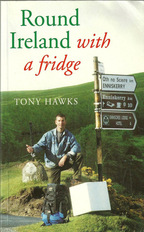
Tony Hawkes: Round Ireland with a fridge
A brilliant example of ,as Tony himself quotes,"A totally purposeless idea,but a damn fine one ..."
As a result of a drunken bet,Tony sets off to hitchhike around Ireland with a fridge.Unexpectedly,the fridge itself became a momentary focus for the people of Ireland,as Tony's progress was publicised by radio.The pair became celebrities,while they meet and gain help from all sorts of characters and unlikely people.
A brilliant example of ,as Tony himself quotes,"A totally purposeless idea,but a damn fine one ..."
As a result of a drunken bet,Tony sets off to hitchhike around Ireland with a fridge.Unexpectedly,the fridge itself became a momentary focus for the people of Ireland,as Tony's progress was publicised by radio.The pair became celebrities,while they meet and gain help from all sorts of characters and unlikely people.